
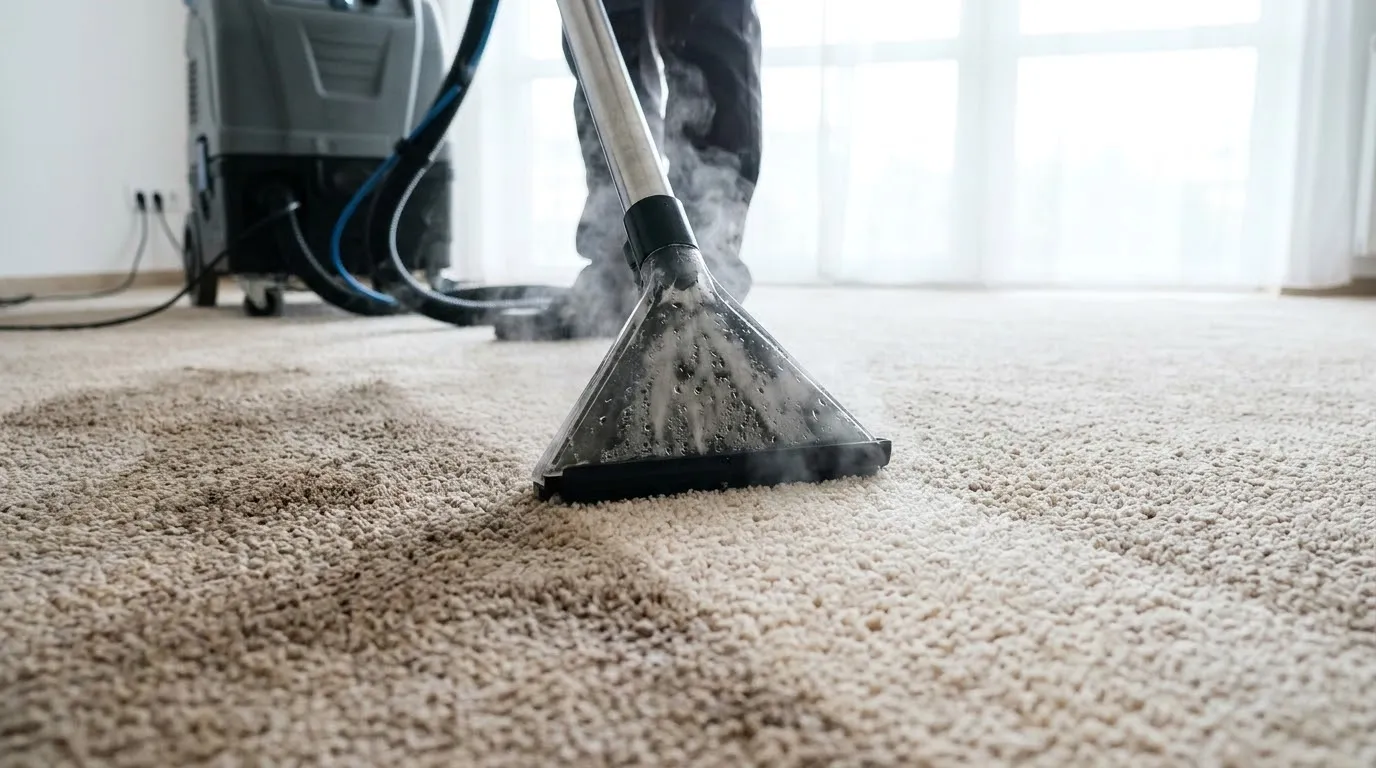
If you have been shopping around for carpet cleaning in Toronto, you have probably noticed that different companies offer different methods: hot water extraction, dry cleaning, carpet shampooing, encapsulation, bonnet cleaning. It can be confusing, especially when everyone claims their method is the best.
This guide cuts through the marketing language and gives you a clear, honest breakdown of each carpet cleaning method: what it is, how it works, who it is right for, and what the tradeoffs are. By the end, you will know exactly what to ask for when you book your next carpet cleaning appointment.
Method 1: Hot Water Extraction (Commonly Called Steam Cleaning)
What It Is
Hot water extraction is the gold standard of carpet cleaning and what most professional carpet cleaners in the GTA use. Despite being commonly called “steam cleaning,” it does not actually use steam. It uses hot water (typically 150 to 220°F; PRIME’s truck-mount runs at 220°F) mixed with a cleaning solution, injected into the carpet under pressure, then immediately extracted along with the dissolved dirt using powerful suction.
How It Works
- Pre-vacuuming to remove loose surface debris
- Pre-treatment of heavily soiled areas and stains
- Hot water and cleaning solution injected at high pressure into the carpet pile
- Powerful wet vacuum extracts water, solution, and dissolved dirt simultaneously
- Grooming of carpet pile to restore texture and aid drying
The Equipment Difference: Truck-Mounted vs Portable
Hot water extraction can be done with truck-mounted equipment (mounted in a van outside your home, with hoses running inside) or portable units carried inside. This distinction matters enormously:
- Truck-mounted: Much higher water temperature, stronger suction, faster drying, superior results: the professional choice
- Portable: More convenient for high-rises and condos where truck access is limited, but lower performance than truck-mounted
Pros
- Most effective deep cleaning method available: removes up to 95% of dirt, bacteria, and allergens
- Recommended by the Institute of Inspection Cleaning and Restoration Certification (IICRC)
- Required by most carpet manufacturers to maintain warranty
- Kills dust mites and bacteria with high heat
- No chemical residue when performed correctly
- Effective for pet stains, odours, and deep soiling
Cons
- Longer drying time: about 5 hours with professional truck-mounted equipment (24 to 48 hours with consumer rental machines)
- Must stay off carpets during drying to avoid re-soiling
- Not suitable for very moisture-sensitive natural fibres without specialist adaptation
Best For
Almost all residential carpet cleaning in Toronto, including homes with pets and children, allergy-sensitive households, heavily soiled carpets, odour removal, and annual or semi-annual deep maintenance cleans. This is what Prime Carpet Cleaning uses for all standard residential services.
Method 2: Dry Carpet Cleaning (Low-Moisture Methods)
What It Is
“Dry cleaning” in carpets is somewhat misleading: it does not mean zero moisture, but rather very low moisture. The two main low-moisture methods are encapsulation and dry compound cleaning.
Encapsulation
A polymer-based cleaning solution is applied to the carpet. As it dries, it crystallizes around dirt particles, encapsulating them. The crystallized compound is then vacuumed away. Very little moisture is used, so carpets are walkable within 30 to 60 minutes.
Dry Compound (Absorbent Compound)
A moist, absorbent compound (resembling fine sawdust or powder) is worked into the carpet using a machine with counter-rotating brushes. The compound absorbs dirt and oils from the fibres. After a short dwell time, it is vacuumed out.
Pros
- Very fast drying: carpets ready to use within 30 to 60 minutes
- Good for commercial settings where downtime is not acceptable
- Lower risk of over-wetting or moisture-related damage
- Good for wool and natural fibre carpets that are moisture-sensitive
- Useful as an interim clean between deep hot water extraction cleans
Cons
- Does not clean as deeply as hot water extraction; mostly addresses surface and mid-pile soiling
- Cannot effectively remove deep stains or odours embedded in the padding
- Polymer residue from encapsulation can build up over time with repeated use
- Compound residue can remain in carpet fibres if vacuuming is insufficient
- Not effective for pet odour removal or deep bacterial contamination
Best For
Commercial carpets with high foot traffic that need fast turnaround, interim maintenance between hot water extraction cleans, and natural fibre carpets (wool, sisal) where moisture sensitivity is a concern. Not the best choice as your primary residential cleaning method.
Method 3: Carpet Shampooing
What It Is
Carpet shampooing is one of the oldest professional carpet cleaning methods. A foamy shampoo solution is agitated into the carpet using a rotary machine, then allowed to dry. The dried foam (with encapsulated dirt) is vacuumed away. Some older shampoo methods also use wet extraction after agitation.
How It Works
A rotary scrubbing machine works shampoo deep into the carpet fibres. The foam action lifts dirt to the surface as it dries. Once fully dry, the residue is vacuumed out. Some carpet shampooers also extract the wet foam.
Pros
- Good scrubbing action for heavily soiled carpets with compacted soil in traffic lanes
- Relatively inexpensive equipment
- The physical agitation can loosen embedded grime effectively
Cons
- Prone to leaving cleaning solution residue in carpet fibres
- Residue attracts dirt rapidly; carpets often re-soil faster after shampooing than after hot water extraction
- Longer drying times similar to or exceeding hot water extraction
- Risk of over-wetting, leading to mould and mildew growth
- Not effective for odour removal
- Largely replaced by more modern methods in professional cleaning
Best For
Honestly, traditional shampooing has been largely superseded by hot water extraction for most situations. If a company still offers shampooing as its main method, it is worth asking about its extraction process and whether there is a residue risk. Modern professional cleaning companies in the GTA have moved on from this as a primary method.
Method 4: Bonnet Cleaning
What It Is
Bonnet cleaning uses a rotary machine fitted with an absorbent pad (the “bonnet”) that has been pre-treated with cleaning solution. The spinning bonnet absorbs dirt from the surface of the carpet fibres. When the pad becomes saturated, it is replaced with a clean one.
Pros
- Very fast: a large commercial carpet can be cleaned quickly
- Carpets ready to use almost immediately
- Useful for maintaining appearance in commercial settings between deep cleans
Cons
- Entirely surface-level cleaning; does not penetrate the carpet pile
- High risk of spreading rather than removing dirt
- Can cause carpet fibre distortion with repeated use (the spinning motion can untwist pile fibres)
- Cleaning solution residue often remains
- Not suitable for residential deep cleaning purposes
Best For
Commercial settings like hotels where quick surface appearance restoration is needed between professional deep cleans. Not recommended for residential homes as a primary or deep-cleaning method.
Comparing the Methods: At a Glance
| Method | Cleaning Depth | Drying Time | Odour Removal | Best Use Case |
|---|---|---|---|---|
| Hot Water Extraction | Deep (full pile) | About 5 hours | Excellent | Residential homes, pet/allergy households |
| Dry / Encapsulation | Surface to mid-pile | 30 to 60 min | Poor | Commercial, natural fibres, interim clean |
| Shampooing | Mid-pile | 6 to 12 hours | Fair | Mostly superseded by HWE |
| Bonnet Cleaning | Surface only | 15 to 30 min | None | Commercial maintenance only |
What Method Is Right for Your Home?
For the vast majority of Toronto and GTA homeowners, hot water extraction (performed with professional truck-mounted equipment) is the clear recommendation. It is what carpet manufacturers require for warranty compliance, what the IICRC recommends, and what delivers the most thorough, lasting results for residential carpets.
The exception is natural fibre carpets (wool, sisal, jute) or moisture-sensitive situations where low-moisture methods may be appropriate. In these cases, an experienced professional will assess your specific carpets and recommend the right approach.
Questions to Ask When Booking Carpet Cleaning
- Do you use truck-mounted or portable equipment?
- What temperature does your hot water extraction system operate at?
- Do you pre-treat stains and traffic lanes separately?
- What cleaning solutions do you use, and are they safe for pets and children?
- What is the expected drying time?
- Do you follow IICRC standards (S100) for hot water extraction?
Any reputable Toronto carpet cleaning company should be able to answer these questions confidently. If they are vague or evasive, consider looking elsewhere.
Professional Carpet Cleaning Across the GTA
Prime Carpet Cleaning uses professional truck-mounted hot water extraction for all standard residential services in Toronto, Mississauga, Brampton, Etobicoke, North York, Scarborough, Oakville, Vaughan, Richmond Hill, and Markham.
We are transparent about our methods, use safe professional-grade solutions, and back our work with a 5-day written guarantee: if a treated stain or streak reappears within 5 days, we come back free. Whether your carpets need a routine maintenance clean or a serious deep restoration, we are ready to help.
Want to know more about when to clean? Read our guide on how often you should professionally clean your carpets, or learn how professional methods compare to rental machines in our DIY vs Professional Carpet Cleaning guide.
Get your free quote today. No pressure, just honest pricing for your home.